
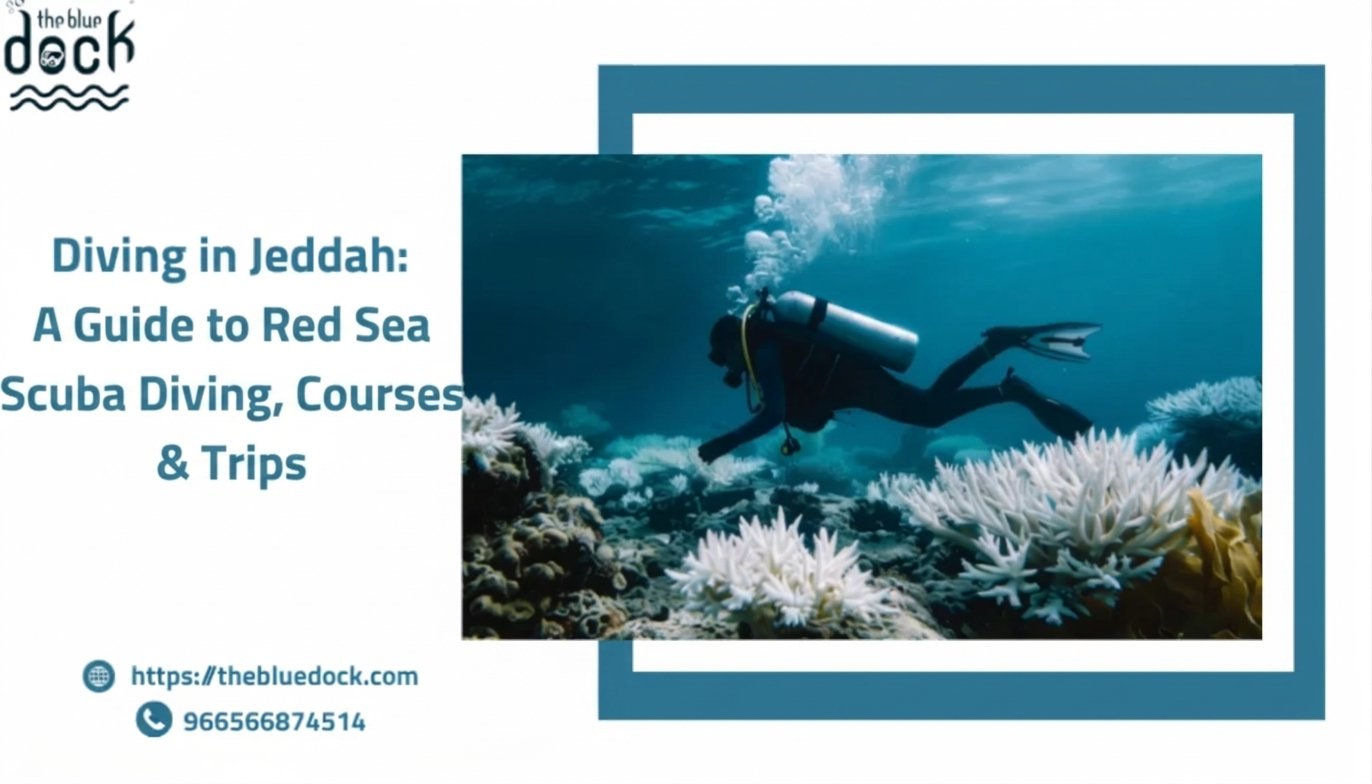
Planning Diving in Jeddah means choosing from more than one kind of underwater experience. Some visitors want to take their first breath underwater, others are interested in earning a scuba certification, and experienced divers may be looking for coral reefs, historic wrecks or offshore boat trips.
Jeddah’s location along the Red Sea makes it a convenient starting point for exploring different marine environments. Before choosing an activity, it helps to understand the difference between an introductory dive, a training course and a guided trip for certified divers.
A professional Diving Center in Jeddah can help you identify the right option based on your experience and plans. At The Blue Dock, beginners and certified divers can explore available diving experiences, PADI training options and Red Sea activities.
This guide brings together what you need to know before booking: the types of diving available, beginner programs, certification paths, boat trips, notable dive locations, marine life, seasonal conditions and approximate costs.
Why Diving in Jeddah Is Worth Exploring
Jeddah sits on the western coast of Saudi Arabia, directly beside the Red Sea. Its location gives divers access to a variety of underwater environments, from coral reefs to offshore sites and historic wrecks.
The Red Sea is known for its coral formations and marine biodiversity. For divers, this means that different locations can offer different underwater landscapes, and the experience may change according to the selected site, visibility and sea conditions.
According to PADI’s Jeddah diving guide, the region offers several forms of diving, including:
- Coral reef diving.
- Wreck diving.
- Wall and drift diving.
- Pinnacle exploration.
- Shore dives.
- Day-boat and liveaboard experiences.
This range makes Jeddah relevant to different stages of a diver’s journey. A beginner can start with a supervised introduction, while a certified diver can explore suitable recreational dives and continue developing their skills.
PADI describes Jeddah as a year-round diving destination. General water temperatures range from approximately 21°C to 28°C, while visibility can reach around 20–50 metres, depending on the location and conditions. These figures are indicative rather than guaranteed for every dive.
The appeal of diving in Jeddah, Saudi Arabia is therefore not limited to one activity. It is the combination of accessible coastal experiences, offshore exploration, training opportunities and the wider Red Sea environment.

Scuba Diving in Jeddah: Choose the Right Starting Point
The first decision is whether you want to try scuba diving, become certified or join a recreational dive as an experienced diver.
These options have different requirements, so choosing the right one makes the booking process easier.
If you have never scuba dived before: An introductory experience lets you learn about the equipment and basic underwater skills before taking a guided dive. You do not need to complete a full certification course to try this type of activity.
If you want to become a qualified diver: A PADI Open Water Diver course provides structured training through theory, controlled-water practice and supervised open-water dives.
If you already hold a certification: You can look into guided recreational dives, boat trips and additional training, provided the planned activity matches your qualification and experience.
Understanding the difference is particularly important for people searching for Jeddah scuba diving for the first time. A single introductory dive is not a substitute for certification, and certified-diver trips have different participation requirements.
Beginner Scuba Diving Jeddah: Discover Scuba Diving Experience
The Discover Scuba Diving Experience in Jeddah is designed for people who want to experience scuba without committing to a full certification course.
The current listing shows a price of SAR 650 per person and an estimated duration of four to five hours. The package includes diving equipment, a safety briefing, basic instruction, a guided dive and professional underwater photography.
The experience introduces beginners to the main parts of scuba equipment, including the mask, regulator, air cylinder, fins and buoyancy control device. The instructor also explains basic underwater communication and the procedures participants need to understand before entering the water.
The experience generally follows three stages:
Getting familiar with the equipment: You learn what the main pieces of equipment do and how they are used during a dive.
Understanding basic skills: The instructor explains breathing, movement, underwater signals and essential safety procedures.
Taking a guided dive: Once the preparation is complete, you experience breathing underwater while following the instructor’s guidance.
This is a suitable starting point for someone who wants to discover scuba diving before deciding whether to pursue formal training.
For more information about what happens during a first dive, see the dedicated guide to the scuba diving experience in Jeddah.
What Should Beginners Know Before Booking?
You do not need previous scuba certification to join an introductory experience, but you should understand the participation requirements and follow the provider’s instructions.
Before confirming your booking, check the following:
- Whether the activity is an introductory dive or a certification course.
- What equipment and services are included.
- The expected duration and meeting point.
- Any swimming, water-comfort or medical requirements.
- Whether additional charges apply.
If you have a medical condition or are unsure whether diving is suitable for you, seek advice from a medical professional familiar with diving medicine before participating.
You can also review the scuba diving requirements in Jeddah before choosing your first experience.
Diving Courses in Jeddah: From Open Water to Advanced Training
Trying scuba diving once is different from learning the skills needed to become a certified diver.
For people who want to develop their abilities, diving courses in Jeddah offer a structured progression. The right course depends on your existing certification, logged dives and future goals.
PADI Open Water Diver Course
The PADI Open Water Diver Course is the usual starting point for people who want to earn their first recreational scuba certification.
The current course listing shows a price of SAR 2,500 and a duration of approximately three to four days. Its published structure includes theory, pool training and four supervised open-water dives.
During training, students develop an understanding of scuba equipment, underwater communication, buoyancy, dive planning and basic safety procedures. They then apply these skills in open water under professional supervision.
This is the main difference between an introductory dive and a certification course: Open Water follows a training program designed to qualify successful students for recreational diving within their certification limits.
Advanced Open Water Diver
Divers who already hold Open Water certification may consider the PADI Advanced Open Water Diver Course.
The current listing shows a duration of approximately two to three days and five adventure dives. Deep Diving and Underwater Navigation are required components, while other dives can be selected from available options.
This course is intended to develop experience through practical diving rather than repeat beginner-level training.
Rescue Diver and PADI Divemaster
For divers interested in safety, emergency response and greater responsibility, the PADI Rescue Diver and First Aid Course develops skills for preventing, recognizing and responding to diving-related problems.
Those considering a professional direction can explore The PADI Divemaster Course. This program focuses on leadership, assisting with dive activities and gaining experience in dive-center operations.
These are later stages of the diving journey, not beginner programs. Check the individual course pages for prerequisites, schedules and current fees before applying.
A typical progression can be summarized as:
- Discover Scuba Diving: Try scuba under supervision.
- Open Water Diver: Complete your first certification.
- Advanced Open Water: Develop experience through additional dives.
- Rescue Diver: Build emergency-response and prevention skills.
- PADI Divemaster: Develop professional diving leadership skills.
Diving Experiences in Jeddah: Boat Diving, Shore Activities and Snorkeling
Scuba diving is only one way to enjoy the Red Sea. The type of activity you choose affects how much time you spend on the water, how you reach the selected location and whether you need a scuba certification.
Boat Diving in Jeddah
A boat trip can provide access to offshore marine areas and turn the activity into a full day at sea.
The current Boat Trips in Jeddah package is listed at SAR 550 and has an approximate duration of eight hours.
The published schedule lists departures at 7:00 AM on Fridays and Saturdays and 9:00 AM on weekdays.
The package currently includes:
- Two air tanks for each certified diver.
- Professional diving guidance.
- Breakfast and light snacks.
- Hot and cold beverages.
- Fishing equipment, including rods and bait.
- Photography and underwater videography.
- Snorkeling for participants who are not joining the certified scuba dives.
One detail to check before booking is equipment rental. The product listing states that additional diving-equipment rental may be charged separately.
The boat trip is therefore different from a short introductory dive. Certified divers can join the scuba activities, while beginners can participate in snorkeling as part of the broader sea experience.
For anyone comparing diving trips in Jeddah or scuba diving trips in Jeddah, the important questions are what the package includes, which activities match your experience and what the final schedule will look like.
Shore Diving vs. Boat Diving
Shore diving and boat diving differ mainly in how divers reach the selected site.
Shore diving begins from a coastal entry point. It can be convenient when a suitable location and conditions are available.
Boat diving involves traveling by vessel to a selected marine area. It can provide access to offshore reefs, wrecks and other underwater environments farther from the coast.
Both formats are recognized among the diving opportunities around Jeddah, but the availability of a specific activity depends on the operator, the location and conditions on the day.
When comparing shore diving in Jeddah with boat-based activities, confirm which format is actually offered for your preferred date rather than assuming that every coastal trip includes shore scuba diving.
Snorkeling in Jeddah: An Alternative to Scuba
Not everyone wants to use scuba equipment. Snorkeling in Jeddah offers another way to observe the underwater environment while remaining at the surface.
Participants generally use a mask and snorkel to look beneath the water while swimming. It does not involve the same equipment or training as scuba diving.
The Blue Dock’s boat-trip package provides a snorkeling option for beginners who are not joining the certified scuba dives.
For more information about this activity, visit the dedicated snorkeling in Jeddah guide.

Red Sea Diving Jeddah: Reefs, Wrecks and Marine Life
One of the main reasons divers explore Red Sea Diving Jeddah is the variety of underwater landscapes in the surrounding region.
The Saudi Red Sea Authority identifies several notable diving areas near Jeddah, including Abu Tair, Umm Al-Hajar and Abu Madafi. These locations are associated with coral reefs and recognized wrecks.
Abu Tair and Cable Wreck
Located approximately 15 nautical miles from Jeddah, Abu Tair features around 5.3 square kilometres of coral reefs.
The area is also associated with Cable Wreck, which sank in 1978 and rests at approximately 25 metres. The submerged vessel has developed into a reef environment containing hard and soft corals.
Umm Al-Hajar: Chicken Wreck and Marble Wreck
Umm Al-Hajar features approximately 6.5 square kilometres of coral reefs.
Two recognized wrecks are associated with the area:
- Chicken Wreck: Sank in 1976 at a depth of approximately 20 metres.
- Marble Wreck: Sank in 1979 at a depth of approximately 10 metres.
The surrounding marine environment includes species such as lionfish and eels.
Abu Madafi and SS African Wreck
Near Durrat Al Arous, Abu Madafi is known for its coral reefs and the SS African Wreck, a historic vessel dating back more than 100 years.
These locations demonstrate why Jeddah diving spots offer different underwater environments rather than one uniform type of dive.
However, a named location is not automatically suitable for every diver. Depth, currents, visibility, certification and recent experience all matter when selecting a dive site.
For a more detailed location guide, including individual sites and wreck information, see Best Diving Spots in Jeddah.
What Marine Life Can You See?
The Red Sea’s marine environment is another major attraction for visitors interested in Red Sea marine life in Jeddah.
Depending on the location and conditions, divers may observe:
- Coral formations and reef structures.
- Tropical reef fish.
- Turtles and rays.
- Moray eels and lionfish.
- Marine organisms living around submerged wrecks.
The species and number of animals encountered vary between locations and dives. Wildlife sightings are natural encounters, not guaranteed attractions.
Divers should avoid touching coral, chasing marine animals or disturbing underwater habitats. Maintaining good buoyancy and following the dive briefing helps protect the environment.
Best Time for Diving in Jeddah: Understanding Sea Conditions
Jeddah is described by PADI as a year-round diving destination. General water temperatures range from approximately 21°C to 28°C, while visibility can reach around 20–50 metres depending on the site and conditions.
That does not mean every day provides identical diving conditions.
Wind, currents, visibility and sea state can influence the suitability of a particular location. An offshore wreck dive, for example, may require different considerations from a shallower reef experience.
Instead of choosing a date based only on a fixed seasonal recommendation, check the expected conditions and available trips close to your intended visit.
Visitors planning a short stay in Jeddah should also confirm the departure schedule, meeting point and estimated duration before arranging the rest of their itinerary.
Scuba Diving Jeddah Price: What Should You Expect?
The price depends on the activity you choose. An introductory dive, a full-day boat trip and a multi-day certification course do not provide the same service.
The current The Blue Dock listings include:
- Discover Scuba Diving: SAR 650 per person.
- Boat Trips in Jeddah: SAR 550 per person.
- PADI Open Water Diver: SAR 2,500.
- PADI Advanced Open Water: SAR 2,000.
The introductory experience is listed as a four-to-five-hour activity, while the boat trip takes approximately eight hours. The certification courses require several days of training.
These are listed prices and may change. Additional equipment rental may also apply to the boat trip.
For a complete comparison of packages and course costs, visit the dedicated Scuba Diving Jeddah Price Guide. It is the better page to consult when you are comparing the financial details of individual programs.
Choosing a Diving Center in Jeddah: What Should You Check?
Finding a suitable Diving Center in Jeddah involves more than comparing advertised prices. The provider should explain the activity clearly and help you understand whether it matches your experience and qualifications.
Before booking, consider these five points.
Instructor qualifications: Ask about the supervision provided for introductory dives and the teaching qualifications associated with certification courses.
Equipment and inclusions: Confirm which equipment is included, whether rental fees apply and what services are part of the package.
Activity requirements: Make sure you understand whether you are booking an introductory dive, a course, a guided recreational dive or a snorkeling trip.
Schedule and location: Check the meeting point, departure time, estimated duration and any documents or preparation required.
Communication and safety: The provider should explain the briefing process, answer your questions and make the activity requirements clear before you confirm your booking.
For people comparing Jeddah diving centers, these details are more useful than promotional descriptions alone. They help you understand what you are booking and whether the experience suits your level.
How to Prepare for Your First Dive
A little preparation can make your first underwater experience more comfortable.
Before the activity:
- Confirm your booking and meeting time.
- Review the package inclusions.
- Ask about swimming and medical requirements.
- Complete any requested forms honestly.
- Get adequate rest and arrive on time.
During the briefing and dive:
- Listen carefully to the instructor.
- Ask questions if any procedure is unclear.
- Follow the equipment and communication instructions.
- Stay with the instructor or assigned group.
- Communicate any discomfort immediately.
- Avoid touching coral, marine animals or wreck structures.
After the dive, follow your instructor’s advice about post-dive procedures and the appropriate interval before flying. This is especially important when planning multiple dives or a flight after your sea activity.
Explore the Red Sea Responsibly
The coral reefs, marine habitats and wreck environments are what make the Red Sea worth exploring. Protecting them should be part of every diving experience.
Divers can help by maintaining good buoyancy, avoiding contact with coral, leaving marine animals undisturbed and respecting wreck structures.
Follow the site briefing and any local restrictions provided by the operator. Do not collect coral, shells or marine life, and avoid entering or touching wreck structures unless your qualification and the dive plan specifically allow it.
Responsible diving makes the underwater environment more enjoyable for future visitors as well as the people exploring it today.
Plan Your Diving in Jeddah Experience
Diving in Jeddah can be a first supervised dive, a PADI certification course, a full-day boat trip or a guided exploration of a reef or wreck site.
The best option depends on your current experience and what you want from the trip. Beginners can start with Discover Scuba Diving, while those interested in formal training can work toward Open Water certification and progress to advanced or professional programs. Certified divers can consider suitable recreational and boat-based experiences.
Jeddah’s location on the Red Sea gives visitors access to several underwater environments, but choosing the right activity is more important than simply choosing the most advanced one.
Start with your experience level, check the current package information and ask the dive team about the conditions and arrangements for your preferred date.

Frequently Asked Questions About Diving in Jeddah
Is Jeddah good for scuba diving?
Yes. Jeddah is a recognized Red Sea diving destination with access to coral reefs, wrecks, offshore sites and different types of diving activities. PADI describes it as a year-round destination, although actual conditions vary by location and date.
Can beginners go diving in Jeddah without certification?
Yes. Beginners can join a supervised Discover Scuba Diving experience without previous scuba certification. Independent recreational diving is different and requires the appropriate qualification.
What is the difference between Discover Scuba Diving and Open Water certification?
Discover Scuba Diving is an introductory experience for people who want to try breathing underwater with professional supervision. Open Water is a structured training course involving theory, practice and supervised open-water dives, leading to certification after successful completion.
What are the best places for diving near Jeddah?
The Saudi Red Sea Authority identifies Abu Tair, Umm Al-Hajar and Abu Madafi among notable areas. Their environments include coral reefs and recognized wrecks such as Cable Wreck, Chicken Wreck, Marble Wreck and SS African. The appropriate site depends on experience, certification and sea conditions.
What marine life can I see while diving in Jeddah?
Depending on the site, divers may encounter coral formations, tropical reef fish, turtles, rays, moray eels, lionfish and other marine organisms. Sightings vary and cannot be guaranteed.
Is diving in Jeddah available throughout the year?
PADI describes Jeddah as a year-round diving destination. General water temperatures are around 21–28°C, and visibility can reach approximately 20–50 metres depending on the site and conditions. Always confirm the actual conditions before booking.
How much does scuba diving cost in Jeddah?
Current listed prices include SAR 650 for Discover Scuba Diving, SAR 550 for Boat Trips, SAR 2,500 for Open Water and SAR 2,000 for Advanced Open Water. Check the relevant product pages for the latest prices and inclusions.
Do I need to know how to swim before trying scuba diving?
Requirements depend on the activity. An introductory experience and a formal certification course may have different water-skill requirements. Ask the provider about the specific requirements for your chosen program before booking.
Are boat trips in Jeddah suitable for beginners?
Beginners can join the current boat-trip package for snorkeling. The scuba dives and included air tanks are intended for certified divers. Check the package information for any additional equipment rental requirements.
Which PADI courses are available in Jeddah?
The currently listed options include Open Water Diver, Advanced Open Water Diver, Rescue Diver and First Aid, and the PADI Divemaster course. Each has different prerequisites and training objectives, so choose according to your current certification and experience.


[…] Red Sea is considered one of the most beautiful diving regions in the world, and this destination represents its untouched […]
[…] are specially designed for beginners, tourists, and families who want to explore the beauty of the Red Sea in Jeddah without needing any prior diving training, certification, or technical knowledge. At this stage, the focus is completely on […]
[…] Many travelers assume sea excursions are simply transportation to diving sites. […]
[…] to “Dive Deeper”? Join one of our diving-centered Daily Sea Adventures Jeddah. We visit prime Red Sea dive spots accessible only by boat, offering both beginner introductions and guided dives for certified […]
[…] choosing where to train, your diving center matters as much as the course itself. The Blue Dock is a leading Diving Center in Jeddah offering […]